

Discover What’s New at RAASCEMAN!
Welcome to the first edition of the RAASCEMAN newsletter. RAASCEMAN stands for Resilient and Adaptive Supply Chains for Capability-based Manufacturing as a Service Networks, a European project bringing together researchers and industry partners to make manufacturing networks more flexible and resilient. Our project develops smart tools and methods to help companies predict disruptions, adapt production processes in real time, and collaborate efficiently across supply chains. With dynamic planning and scheduling, decision support systems, and supplier recommendation engines, RAASCEMAN equips supply chains and factories to adapt quickly to any disruption. With this newsletter, we want to show you what we are working on, how it matters, and the impact we aim to achieve in the world of adaptive manufacturing.
Highlights & News
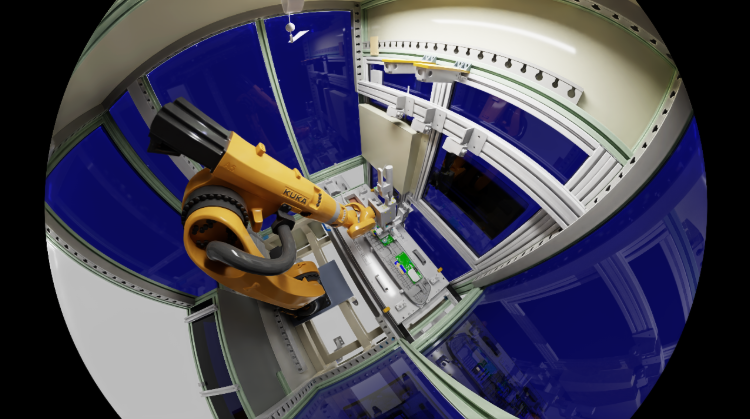
Finding a Common Language for Digital Twins
RAASCEMAN is standardizing data exchange across industries, from automotive to e-bikes. Work Package 2 created a semantic backbone using the Asset Administration Shell (AAS), combining existing standards with new submodels to ensure consistent data interpretation and collaboration.
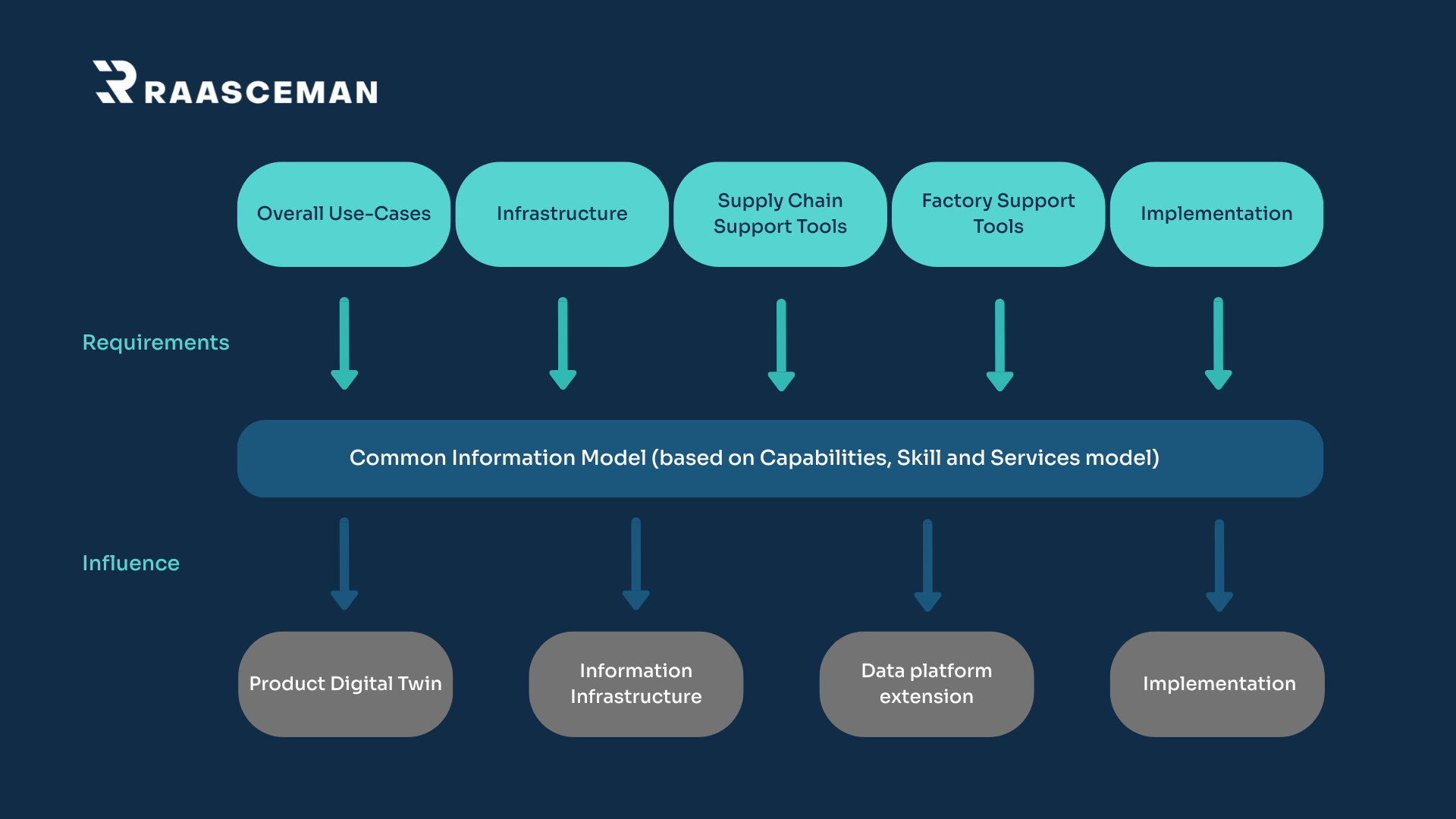
Breakthrough Solution for Industry: A Digital Twin of Production Lines with AI and Integrated Camera Systems
RAASCEMAN teams (CIIRC CTU and AUMOVIO), use NVIDIA Omniverse to simulate robotic production cells. Virtual commissioning allows engineers to test scenarios, prevent errors, and train operators safely before machines are installed.
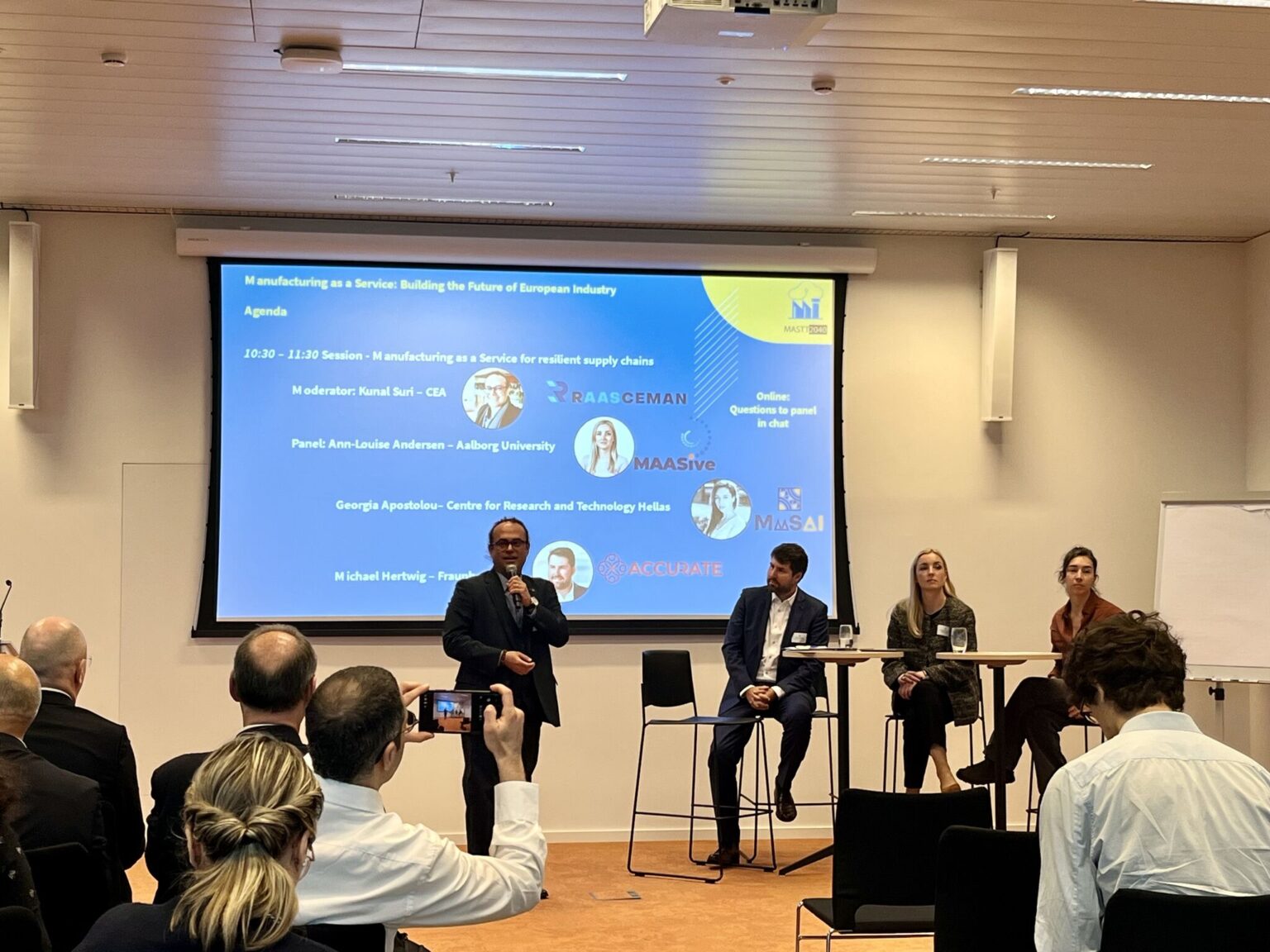
RAASCEMAN Contributes to Shaping the Future of MaaS in Brussels
Kunal Suri represented RAASCEMAN at the Manufacturing Partnership Days 2025 and MASTT2040 Workshop. He also moderated a panel with other EU projects, fostering collaboration and advancing the Manufacturing-as-a-Service ecosystem.
Inspiring EU Project Collaboration in Karlsruhe
RAASCEMAN, M4ESTRO, and Tec4MaaSEs came together at Fraunhofer IOSB to share project updates and explore synergies. Discussions focused on aligning capabilities, exchanging ideas, and identifying collaborative opportunities in smart manufacturing.
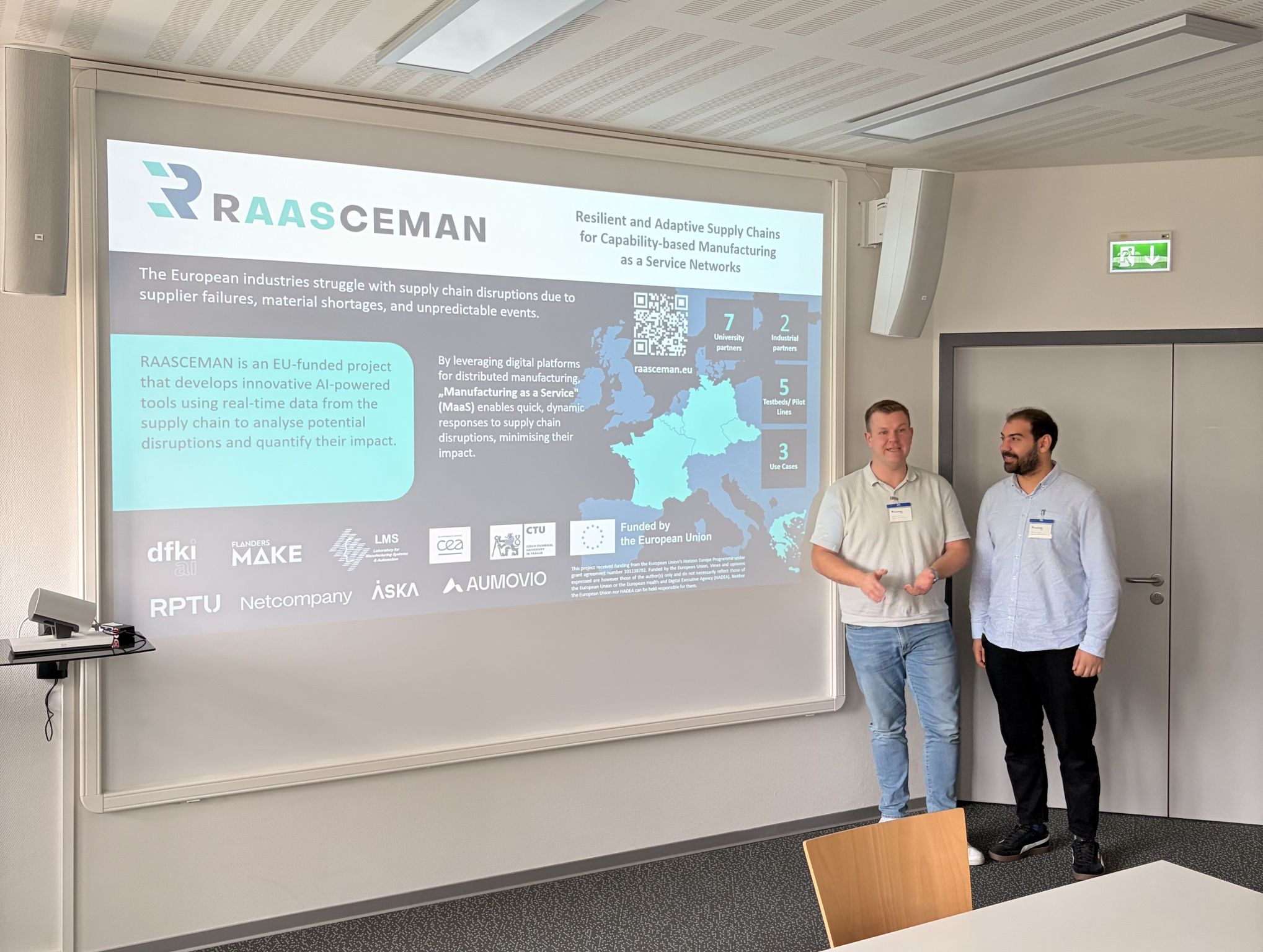
RAASCEMAN at ETFA 2025 in Porto with Four Scientific Contributions
RAASCEMAN contributed four papers showcasing AI-driven manufacturing, digital twins, and Industry 5.0 product modeling. The conference highlighted the project’s impact on international industrial and research communities.
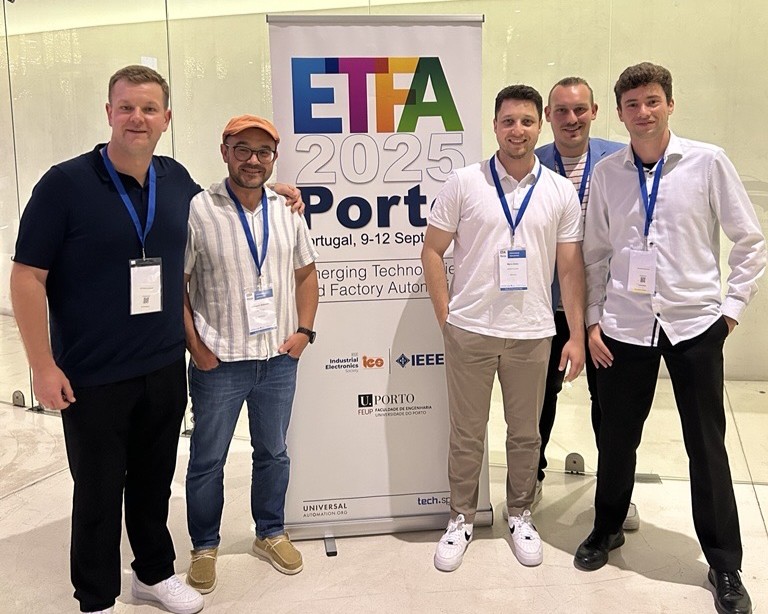
Belgian Delegation Visits CIIRC CTU
Belgian companies toured the RICAIP Testbed Prague at CIIRC CTU and AUMOVIO, seeing RAASCEMAN-enabled flexible manufacturing in action. Highlights included robotic cells, 3D printing, laser machining, and digital twin applications.
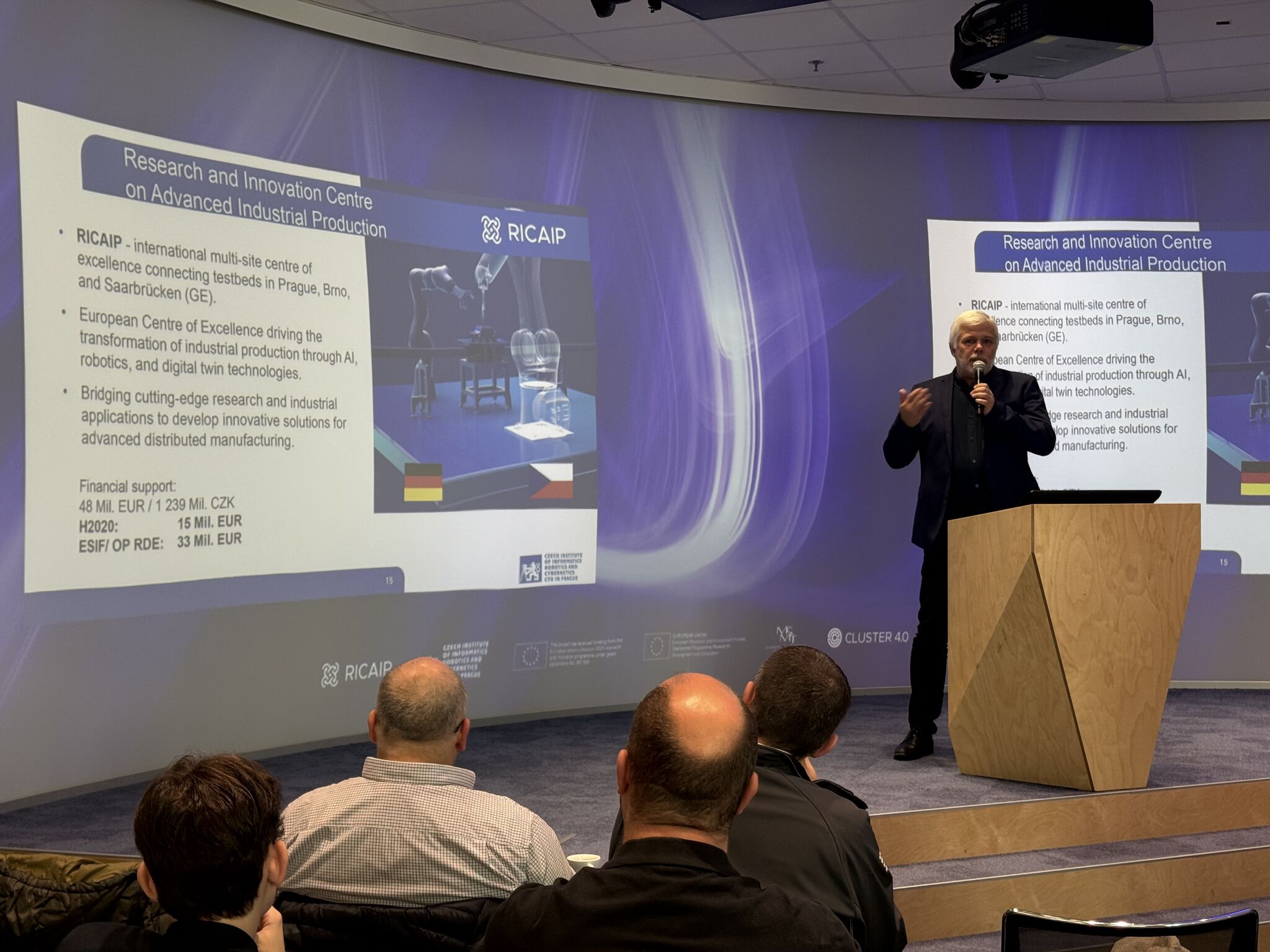
RAASCEMAN Project Meeting 2025 in Prague and Brandýs nad Labem
RAASCEMAN partners gathered in Prague for two days of collaboration, visiting Continental Brandýs and the RICAIP Testbed to explore digital twins, smart production, and the Digital Product Passport. Workshops and discussions connected research and industry, advancing flexible, resilient, and service-oriented manufacturing.
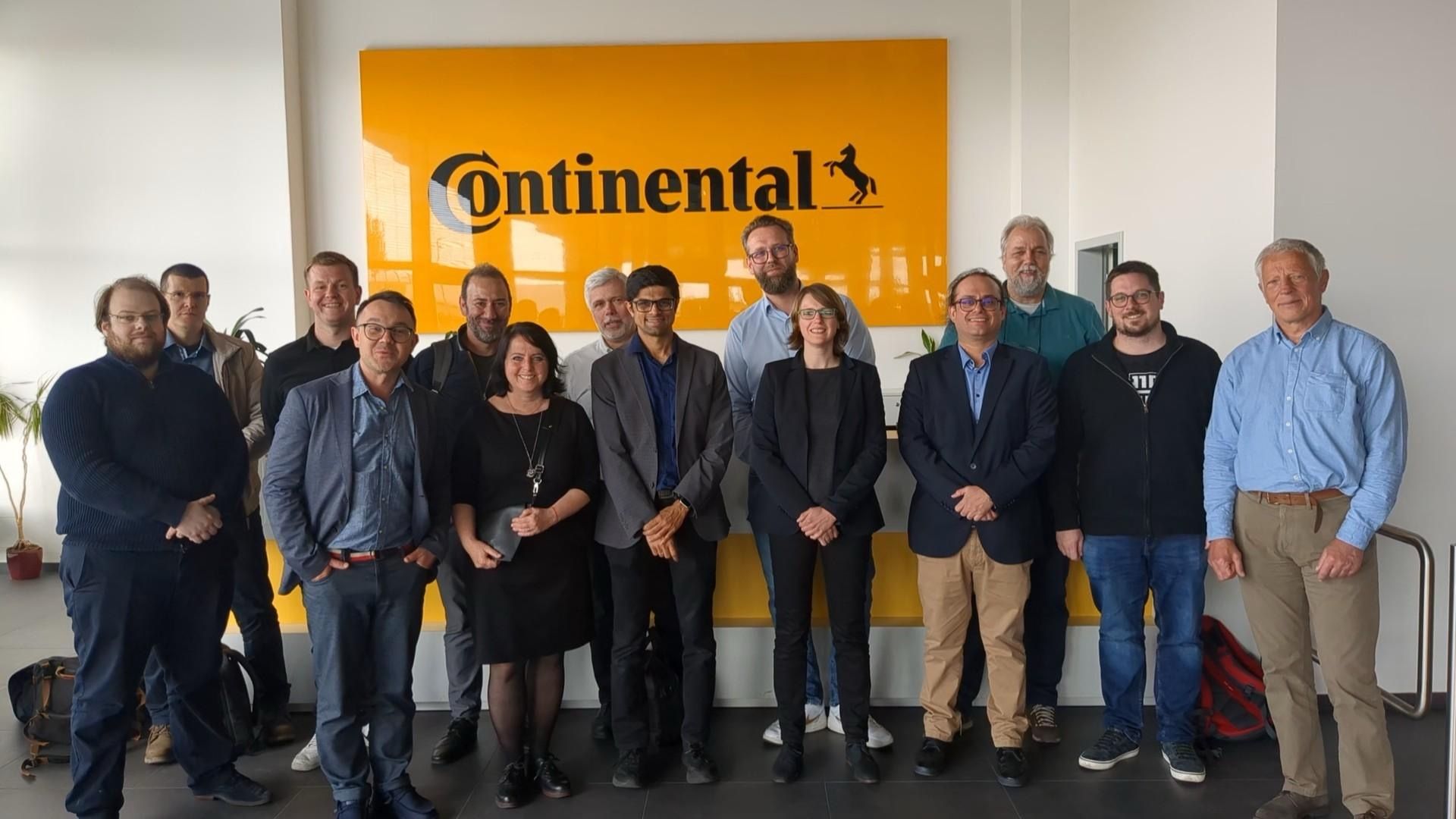
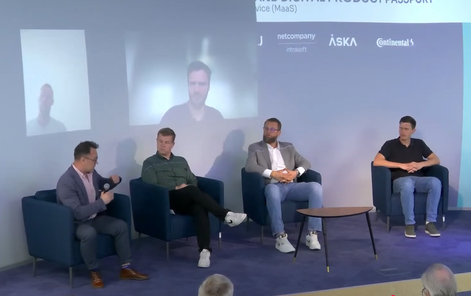
RAASCEMAN Workshop 2025: Digital Twins and Digital Product Passport
As a part of the RAASCEMAN Project Meeting 2025 programme, a public workshop in Prague brought together research and industry experts to explore digital twins, DPPs, and MaaS. Open Q&A sessions highlighted the intersection of theory and real-world manufacturing practice.
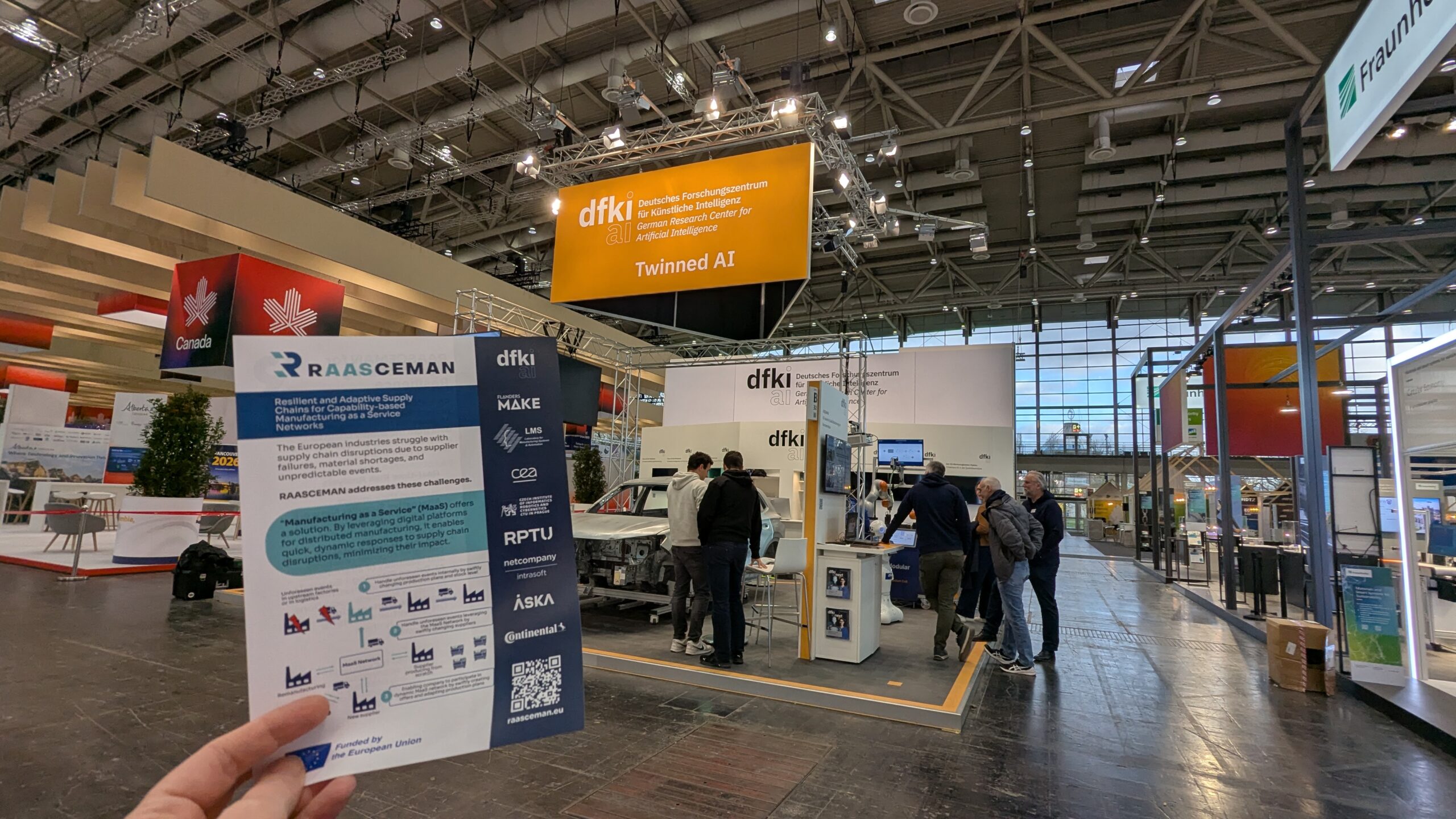
RAASCEMAN at Hannover Messe 2025
The project showcased AI-driven MaaS solutions, digital twins, and supply chain resilience tools at Hannover Messe. Experts, including Achim Wagner who we interviewed for a short video on LinkedIn, discussed how RAASCEMAN enables agile, interconnected production systems.
Publications & Outcomes
All project outputs are openly available on our Zenodo community page. We publish publications, deliverables, and other materials there as they are completed. Feel free to explore the collection, it’s the most comprehensive overview of our research results in one place.
Isaac Sim Integrated Digital Twin For Feasibility Checks In Skill-based Engineering
Khalil, H., Sidorenko, A., Kolek, M., Ruskowski, M., Wagner, A. (2025)
Skill-based engineering encapsulates complex control software into reusable and parameterizable components. The integration of NVIDIA’s Isaac Sim framework with ROS and OPC UA allows for realistic digital twin simulations, enabling feasibility checks for robot skills using both physical and virtual control loops.
Towards engineering product digital twins for industry 5.0: definition and modeling approach
Nguyen, Q., Suri, K., Der Sylvestre Sidibe, G. (2025)
The work formalizes Product Digital Twin definitions and proposes a modeling and deployment approach suitable for Industry 5.0. It aligns PDT information models with human-centric, sustainable, and resilient manufacturing principles, facilitating integration with emerging digital product standards.
The Role of Technical Documentation in Enabling Automated Generation of Machine Capabilities
Kremser, P., Legler, T., Ruskowski, M. (2025)
Technical documentation is standardized and leveraged to automatically generate machine capabilities. Large language models bridge gaps in structured knowledge, enabling interoperability through the CSS model, OPC UA, and the Asset Administration Shell, supporting Manufacturing-as-a-Service platforms.
Capability Determination in Manufacturing Using Historical Data
Simon, M., Kremser, P., Legler, T., Ruskowski, M. (2025)
Historical manufacturing data is analyzed to systematically determine machine capabilities. The approach decouples processes from resources, supporting flexible, multi-variant production and enabling SMEs to integrate resources into networked manufacturing service systems.
Composing Relative Spatial Location Models in Skill-based Robotic Reconfigurable Cyber-Physical Production Modules
Sidorenko, A., Ruskowski, M., Wagner, A. (2025)
OPC UA Relative Spatial Location models are integrated with ROS2 tf2 functionality to automatically update robotic module structures. This ensures accurate composition and sharing of kinematic information, improving adaptability and interoperability of skill-based robotic systems.
Towards OPC UA over Shared Memory as an Open Intra-Host Middleware for Automation Software
Barth, T., Kremser, P., Legler, T., Ruskowski, M. (2025)
A shared-memory OPC UA middleware enables efficient, low-latency communication between co-located automation applications. The approach supports scalable microservice architectures and enhances interoperability within virtualized and decoupled industrial automation environments.
Follow Our Journey on LinkedIn
You can follow the project’s ongoing work on LinkedIn profile, where we share insights from our research, moments from events, and updates from our activities. It’s the easiest way to stay in touch between newsletters.
Want to know more?
Sign up to RAASCEMAN newsletter.
Get the portion of news and updates directly into your email.